Microbiology Cheat Sheet — 1-page PDF
Bacterial structure, growth, genetics, viruses, fungi/parasitology, antimicrobials, immunity, sterilization. The whole course on one dense, printable page for your midterm or final, with every formula typeset and worked examples where they help.
The first part is free below. See pricing →
For a specific exam: Microbiology Final exam study sheet.
- 1 pageUS Letter
- 10 sections10 topics
- Free previewfull sheet with Unlimited
 Cheat sheet locked
On the sheet
What’s on it
The topics a typical Microbiology exam tests, all on the one page.
- Bacterial cell structure
- Gram staining
- Microbial growth curve
- Metabolism
- Bacterial genetics: transformation, transduction, conjugation
- Viruses and replication cycles
- Fungi and parasites
- Antimicrobial mechanisms and resistance
- Innate and adaptive immunity
- Sterilization and disinfection
Free preview
The free part, as text
The free part of the sheet, section by section. Unlock the full sheet to read the rest, edit any block, and print it or save it as a PDF.
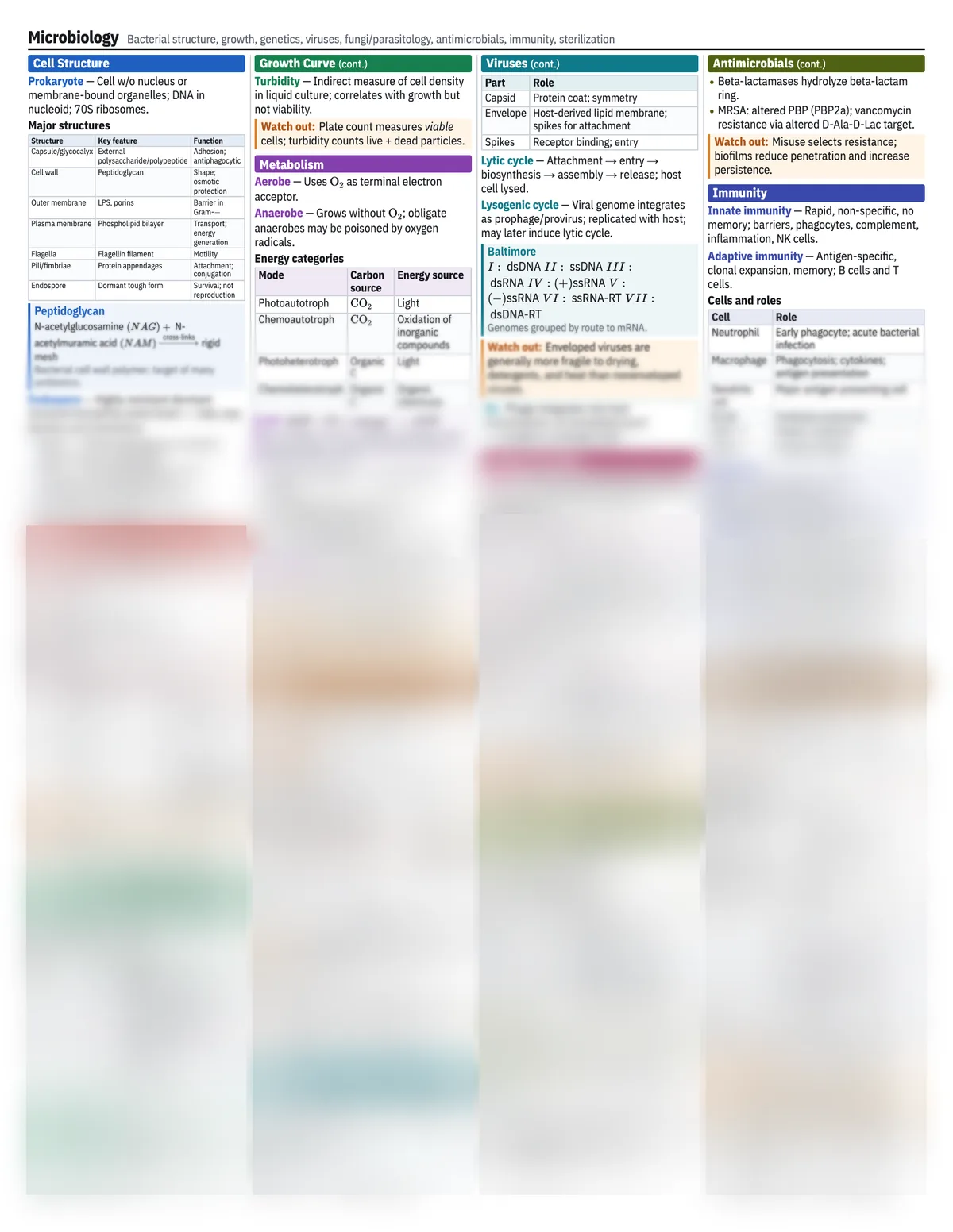
01Cell Structure
- Prokaryote
- Cell w/o nucleus or membrane-bound organelles; DNA in nucleoid; 70S ribosomes.
Major structures
| Structure | Key feature | Function |
|---|---|---|
| Capsule/glycocalyx | External polysaccharide/polypeptide | Adhesion; antiphagocytic |
| Cell wall | Peptidoglycan | Shape; osmotic protection |
| Outer membrane | LPS, porins | Barrier in Gram- |
| Plasma membrane | Phospholipid bilayer | Transport; energy generation |
| Flagella | Flagellin filament | Motility |
| Pili/fimbriae | Protein appendages | Attachment; conjugation |
| Endospore | Dormant tough form | Survival; not reproduction |
Peptidoglycan
N-acetylglucosamine N-acetylmuramic acid rigid mesh
Bacterial cell wall polymer; target of many antibiotics.
- Endospore
- Highly resistant dormant structure formed by some Gram- rods, esp. Bacillus and Clostridium.
- Gram-: thick peptidoglycan; teichoic acids; no outer membrane.
- Gram-: thin peptidoglycan; outer membrane with LPS; periplasm.
- LPS lipid A = endotoxin.
- 70S ribosome = 50S + 30S subunits.
02Growth Curve
- Turbidity
- Indirect measure of cell density in liquid culture; correlates with growth but not viability.
Watch out:Plate count measures viable cells; turbidity counts live + dead particles.
03Metabolism
- Aerobe
- Uses as terminal electron acceptor.
- Anaerobe
- Grows without ; obligate anaerobes may be poisoned by oxygen radicals.
Energy categories
| Mode | Carbon source | Energy source |
|---|---|---|
| Photoautotroph | Light | |
| Chemoautotroph | Oxidation of inorganic compounds | |
| Photoheterotroph | Organic C | Light |
| Chemoheterotroph | Organic C | Organic chemicals |
ATP
Main energy currency; made by substrate-level phosphorylation, oxidative phosphorylation, or photophosphorylation.
- Glycolysis: glucose → pyruvate; ATP + NADH.
- TCA cycle: acetyl-CoA oxidized; NADH/FADH2 produced.
- ETC: e flow drives proton motive force; ATP synthase makes ATP.
04Viruses
Basic parts
| Part | Role |
|---|---|
| Genome | DNA or RNA; ss or ds |
| Capsid | Protein coat; symmetry |
| Envelope | Host-derived lipid membrane; spikes for attachment |
| Spikes | Receptor binding; entry |
- Lytic cycle
- Attachment → entry → biosynthesis → assembly → release; host cell lysed.
- Lysogenic cycle
- Viral genome integrates as prophage/provirus; replicated with host; may later induce lytic cycle.
Baltimore
dsDNA ssDNA dsRNAssRNAssRNA ssRNA-RT dsDNA-RT
Genomes grouped by route to mRNA.
Watch out:Enveloped viruses are generally more fragile to drying, detergents, and heat than nonenveloped viruses.
Ex.Phage integrates into host chromosome, no immediate lysis?
Lysogeny; prophage state.
05Fungi & Parasites
- Fungi
- Eukaryotic heterotrophs with chitin cell walls and ergosterol membranes; yeasts are unicellular, molds filamentous.
06Antimicrobials
- Resistance mechanisms: drug inactivation, target modification, decreased permeability, efflux pumps, bypass pathway, biofilm.
- Beta-lactamases hydrolyze beta-lactam ring.
- MRSA: altered PBP (PBP2a); vancomycin resistance via altered D-Ala-D-Lac target.
Watch out:Misuse selects resistance; biofilms reduce penetration and increase persistence.
07Immunity
- Innate immunity
- Rapid, non-specific, no memory; barriers, phagocytes, complement, inflammation, NK cells.
- Adaptive immunity
- Antigen-specific, clonal expansion, memory; B cells and T cells.
Cells and roles
| Cell | Role |
|---|---|
| Neutrophil | Early phagocyte; acute bacterial infection |
| Macrophage | Phagocytosis; cytokines; antigen presentation |
| Dendritic cell | Major antigen-presenting cell |
| B cell | Antibody production |
| CD4 T | Helper; cytokines |
| CD8 T | Cytotoxic killing |
Antibody
IgM first response→;$ IgA mucosa→$ allergy/parasites
Major immunoglobulin classes.
Cheat sheet locked
Also on the full Microbiology sheet
9 more sections, with every definition, formula and worked example. Unlimited unlocks every full sheet in the library to edit, print or save as a PDF, and makes unlimited sheets from your own notes.
Gram Stain
- Gram stain
- Outcome
Growth Curve
- Binary fission
- Batch culture phases
- Generation time
- Exponential growth
- log growth rate
Metabolism
- Fermentation
Genetics
- Transformation
- Transduction
- Conjugation
- Horizontal gene transfer
- Plasmid
- Operon
Viruses
- Virus
Fungi & Parasites
- Fungal forms
- Parasite
- Key targets
Antimicrobials
- Bactericidal
- Bacteriostatic
- Common mechanisms
- β-lactam
- Selective toxicity
Immunity
- Complement
- Vaccination
Sterilization
- Sterilization
- Disinfection
- Control levels
- Methods
- Pasteurization
FAQ
Questions
About the Microbiology sheet and making your own.
- What does this Microbiology cheat sheet cover?
- It has 10 sections: Cell Structure, Gram Stain, Growth Curve, Metabolism, Genetics, Viruses, Fungi & Parasites, Antimicrobials, Immunity and Sterilization. Together they cover the topics a typical Microbiology exam tests, including bacterial cell structure, Gram staining, microbial growth curve and metabolism.
- Is the microbiology cheat sheet free?
- The first part is free to read on this page, with no account needed. The full sheet opens in the app with Unlimited ($4.99 a month or $19 for a semester), where you can edit it, print it or save it as a PDF. It is one US Letter page and prints cleanly in black and white or colour.
- Can I bring this Microbiology cheat sheet to my exam?
- Only if your course allows a note sheet, so check the syllabus. This one is a single US Letter page. If your exam allows a different size, such as a 3x5 or 4x6 index card or one page front and back, Cheat Sheet AI makes one at exactly that size from your own lecture notes.
- How accurate is it?
- The sheet was written by our engine from a standard course outline, then a second model fact-checked every formula and statement against it; it corrected 4 statements before publishing. Notation and emphasis vary between courses, so check it against your own lecture notes.
- Can I make a Microbiology sheet from my own notes?
- Yes. Upload your lecture slides, notes or study guide and Cheat Sheet AI writes a sheet in your course's notation, sized to exactly the space your exam allows. Your first sheets are free.
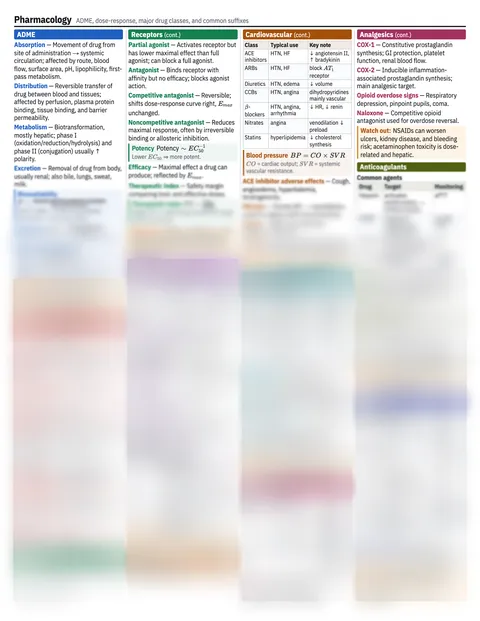
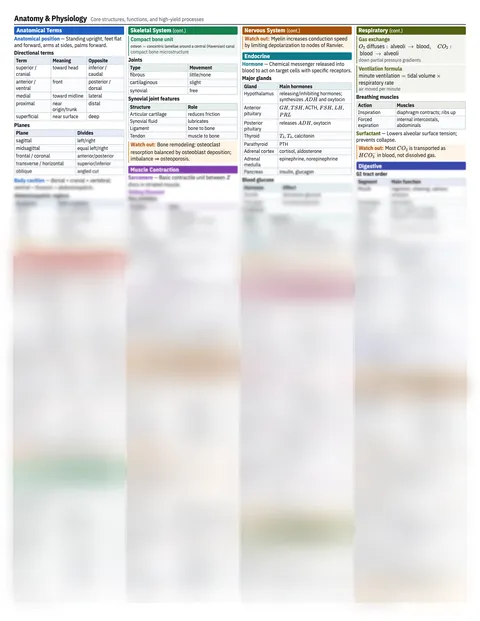
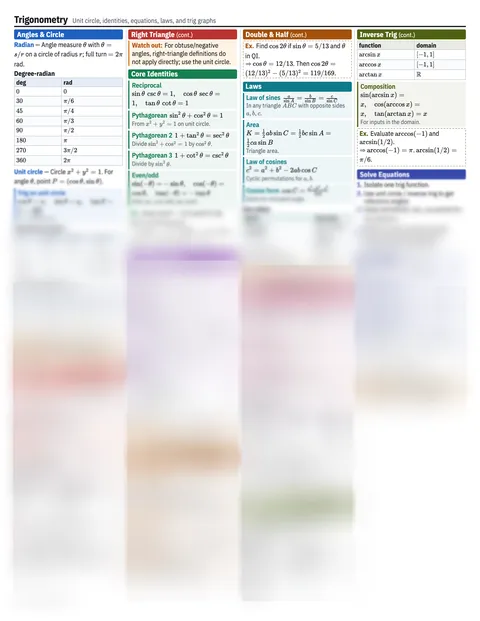
Your course, your notes, one page.
Upload your own Microbiology slides or notes and get a study sheet in your course’s notation. Your first sheet needs no account, and a free account adds one more. See pricing